


MONUMENTS OF THE FIRST STATE INSCRIBED ON THE WORLD HERITAGE LIST
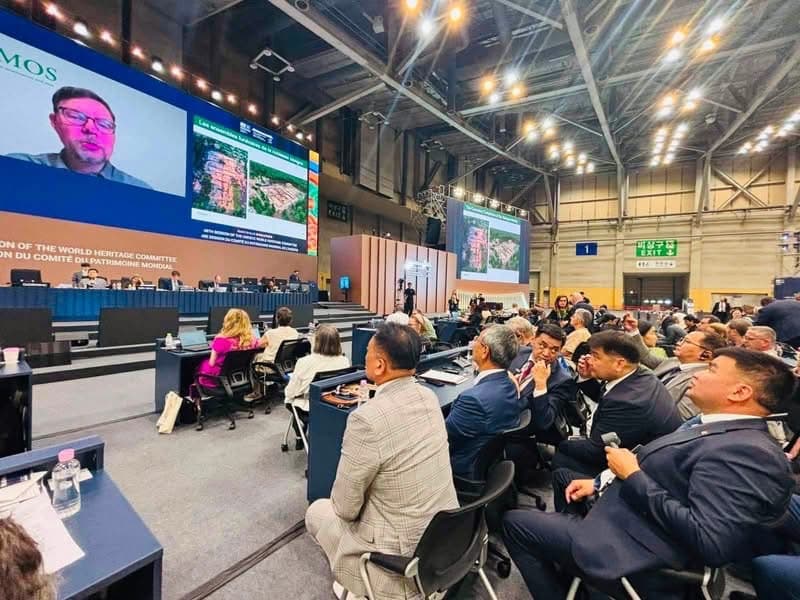
The 48th session of the World Cultural and Scientific Organization UNESCO convened in Busan, Republic of Korea, and registered the complex monument of the Hunnu nobility, the first state of Mongolia on July 25, 2026.
The research project implemented by the Chinggis Khaan National Museum on the complex heritage sites of Noyon Uul (Bornuur soum, Tov Province), Chikhertiin Zoo (Bayantsagaan soum, Tov Province), Duurlig Nars (Bayan-Adraga soum, Khentii Province), Gol Mod-1 and Gol Mod-2 (Arkhangai Province), and Takhiltiin Khotgor (Mankhan soum, Khovd Province) has now achieved international recognition.
Mongolian delegation at the 48th Session of the World Heritage Committee, Minister of Culture, Sports, Tourism and Youth J. Aldarjavkhlan stated, “This is the result of many years of research on the Xiongnu Empire. It has enriched our understanding of history through authentic sources and reflects the invaluable contributions of generations of Mongolian and international archaeologists, historians, scholars, and researchers in defining its outstanding value.”
During the conference, “The head of the scientific working group and director of the Chinggis Khaan National Museum, Academician S. Chuluun, said, “The registration of the relics of the Hunnic nobility by UNESCO is not only a heritage of humanity, but also an event that has recognized the history of the first state to the world. The results of many years of research by scholars are being published today.”
Thus, the Chinggis Khaan National Museum has become a museum that preserves a part of humanity’s shared heritage.